5 minute read

The Science of Recovery: Why Sports Massage Belongs in Every Training Plan
Athletes obsess over the work — the intervals, the reps, the mileage. But performance isn't built in the session itself; it's built in the hours after, when tissue repairs and adapts to the stress you just put it under. Sports massage isn't a luxury bolted onto training, it's one of the few tools that directly speeds up that adaptation window, letting you absorb harder blocks without breaking down.
Understanding Muscle Recovery
Every hard session creates microscopic damage in muscle fibers — that's the whole point, it's how strength and endurance are built. The problem is that recovery is rarely linear. Blood flow to fatigued tissue slows, metabolic byproducts linger, and fascia tightens around overworked muscle groups. Left alone, this process still happens, just slower and less completely, which is why athletes who skip recovery work often plateau despite training harder.
How Massage Supports the Recovery Process
Manual therapy accelerates several of these mechanisms at once. Increased local circulation clears metabolic waste faster, manipulation of fascia restores range of motion that tightens up after repeated loading, and the nervous system downshifts out of a sympathetic, "on" state into one that actually allows repair to happen.
In practice, this shows up as:
Reduced next-day soreness, letting you train at full intensity sooner
Improved joint and muscle range of motion, lowering injury risk under load
Faster clearance of training fatigue, especially after high-volume weeks
Better sleep quality, since parasympathetic activation carries over past the session
Earlier detection of problem areas, before minor tightness becomes an overuse injury
Building Massage Into Your Routine
Timing matters as much as the technique itself. A deep, targeted session 24–48 hours after a heavy strength or interval day tends to work with the body's repair timeline rather than against it — too soon after intense training and you risk aggravating already-inflamed tissue, too late and you've missed part of the recovery window.
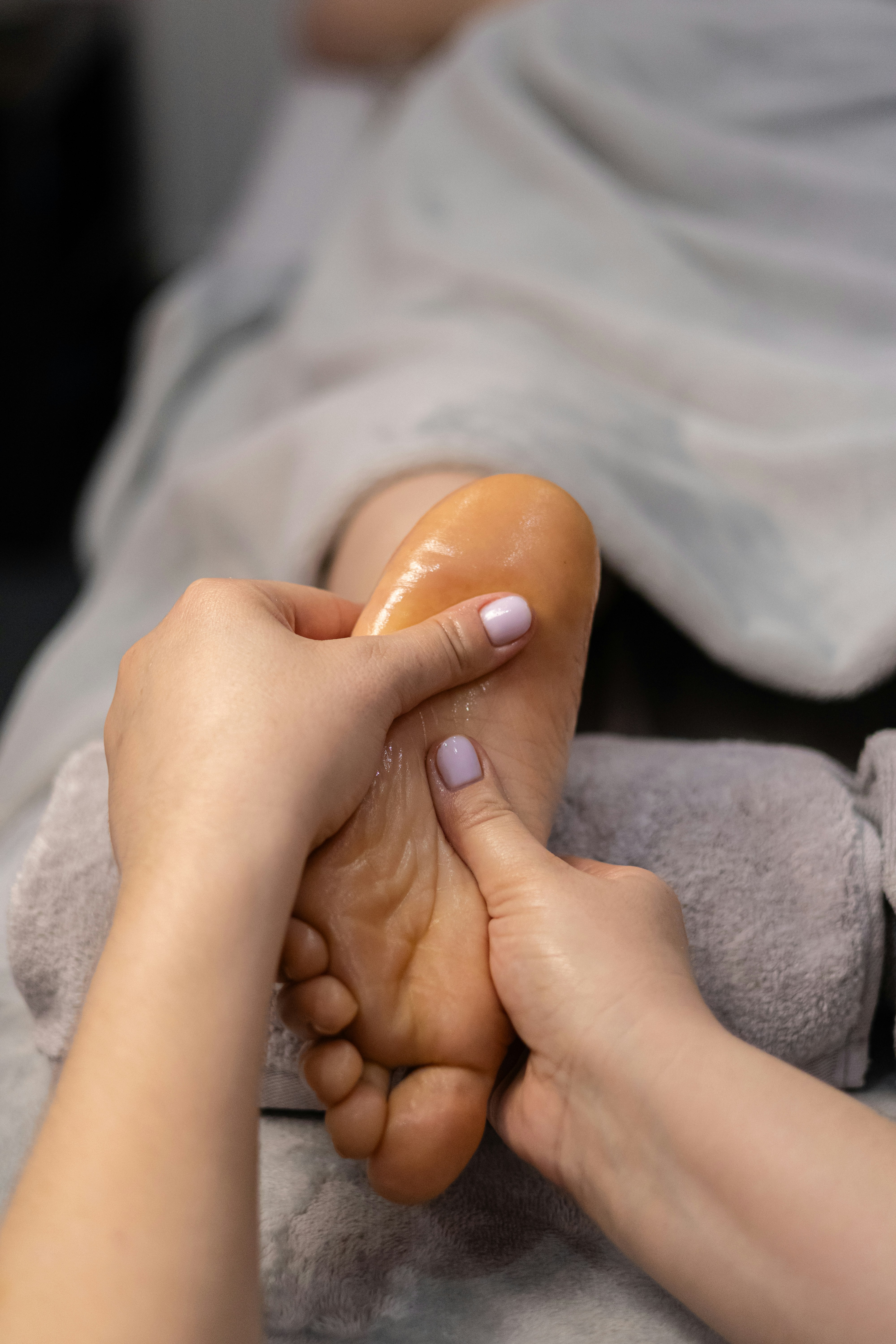
Matching Technique to Training Phase
The right approach shifts depending on where you are in a training cycle. Lighter, flushing work fits best during high-volume base periods, where the goal is simply managing accumulated fatigue. As you move into peak or race-specific weeks, more targeted, precise work on the muscle groups under the greatest load becomes the priority — the goal isn't relaxation at that point, it's making sure nothing limits you on race day.
Share